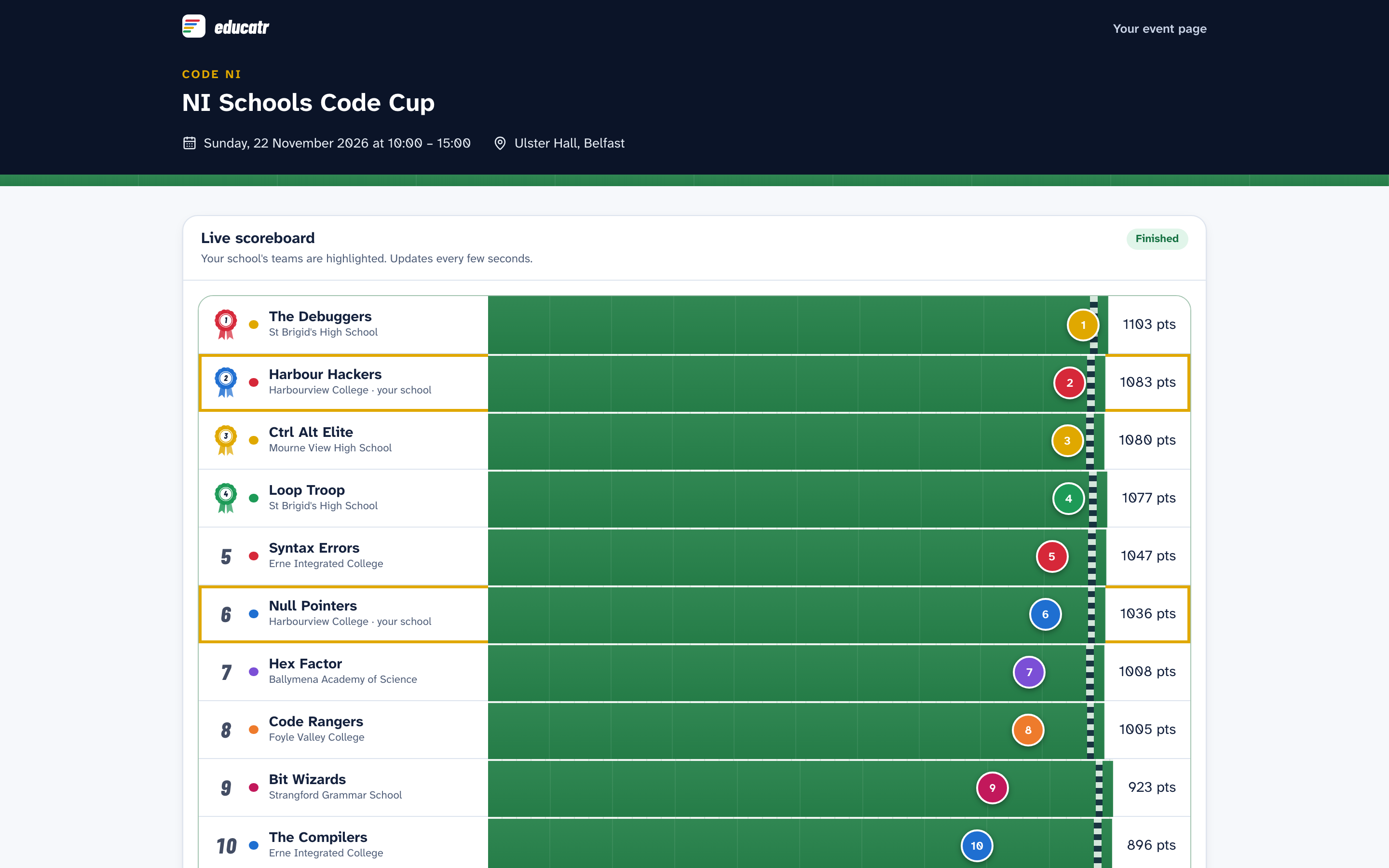
Collect interest, then open entries
Publish the event before the date is confirmed. Schools say they might come; when you open entries, everyone who registered gets an email with the link.
- Max teams per school and team sizes
- Deadlines for team numbers and details
- Reminder emails a week and a day before
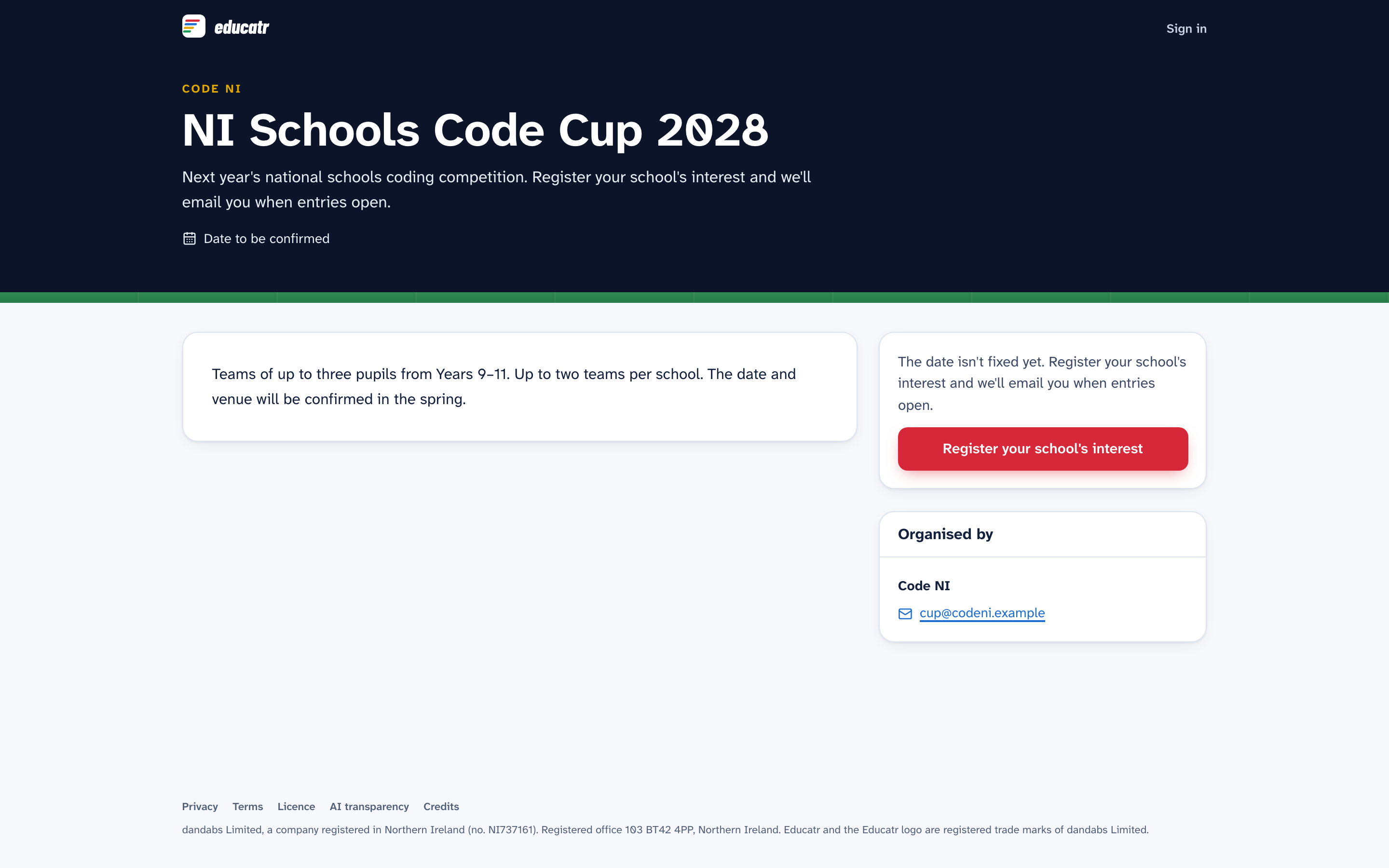
Teachers enter everything you need
Choose what to ask: dietary needs, photo consent, permission to attend, staff contacts, address and transport. Teachers see exactly what's missing before they submit.
- Pupil, staff and school fields you choose
- Team names go straight onto the scoreboard
- Printable PIN cards for the day
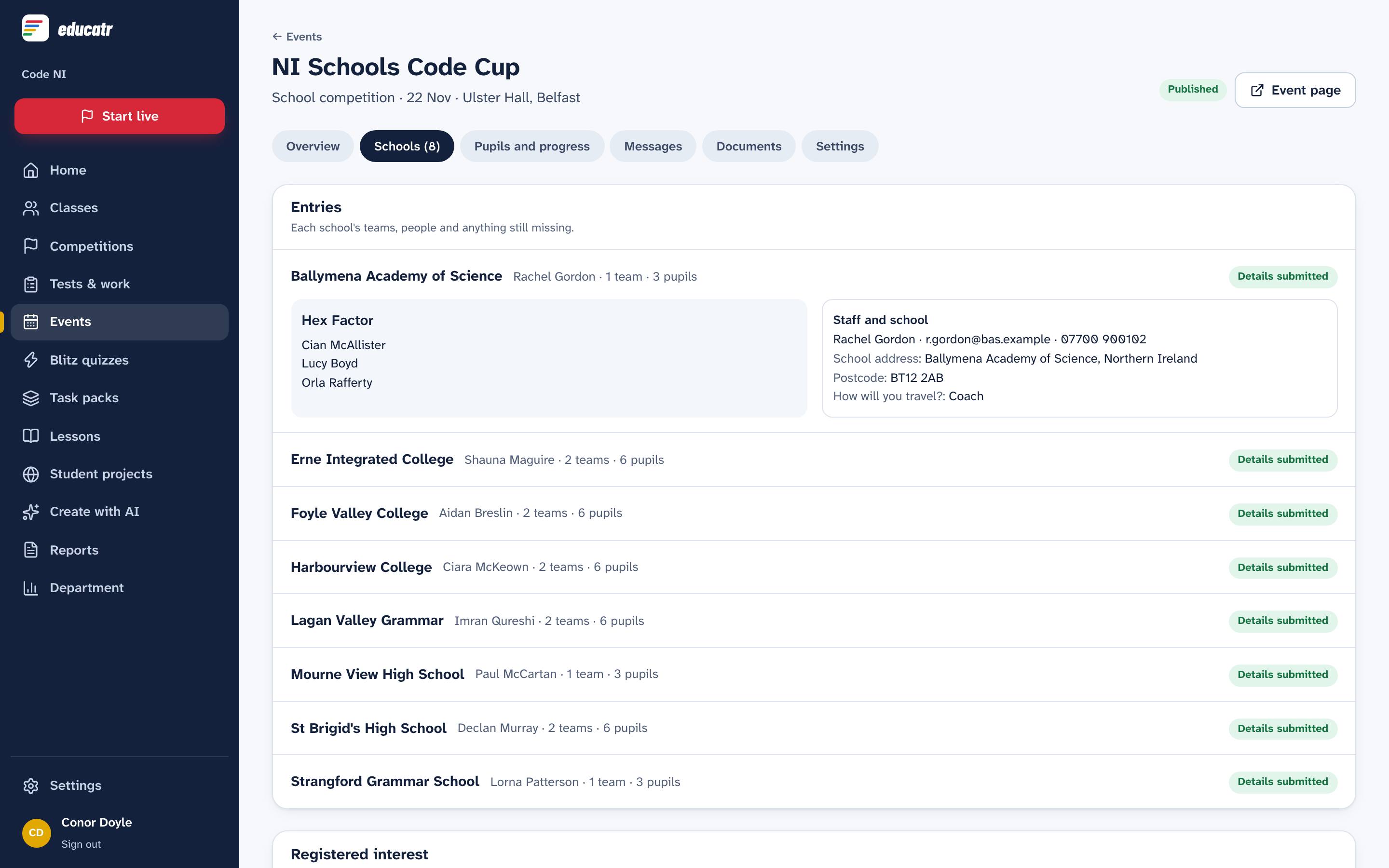
Results for every school
When the competition ends, each teacher sees how their teams placed, what went well, what to practise, and how each pupil did.
- Team places and points
- Strengths and topics to practise
- Per-pupil results for feedback
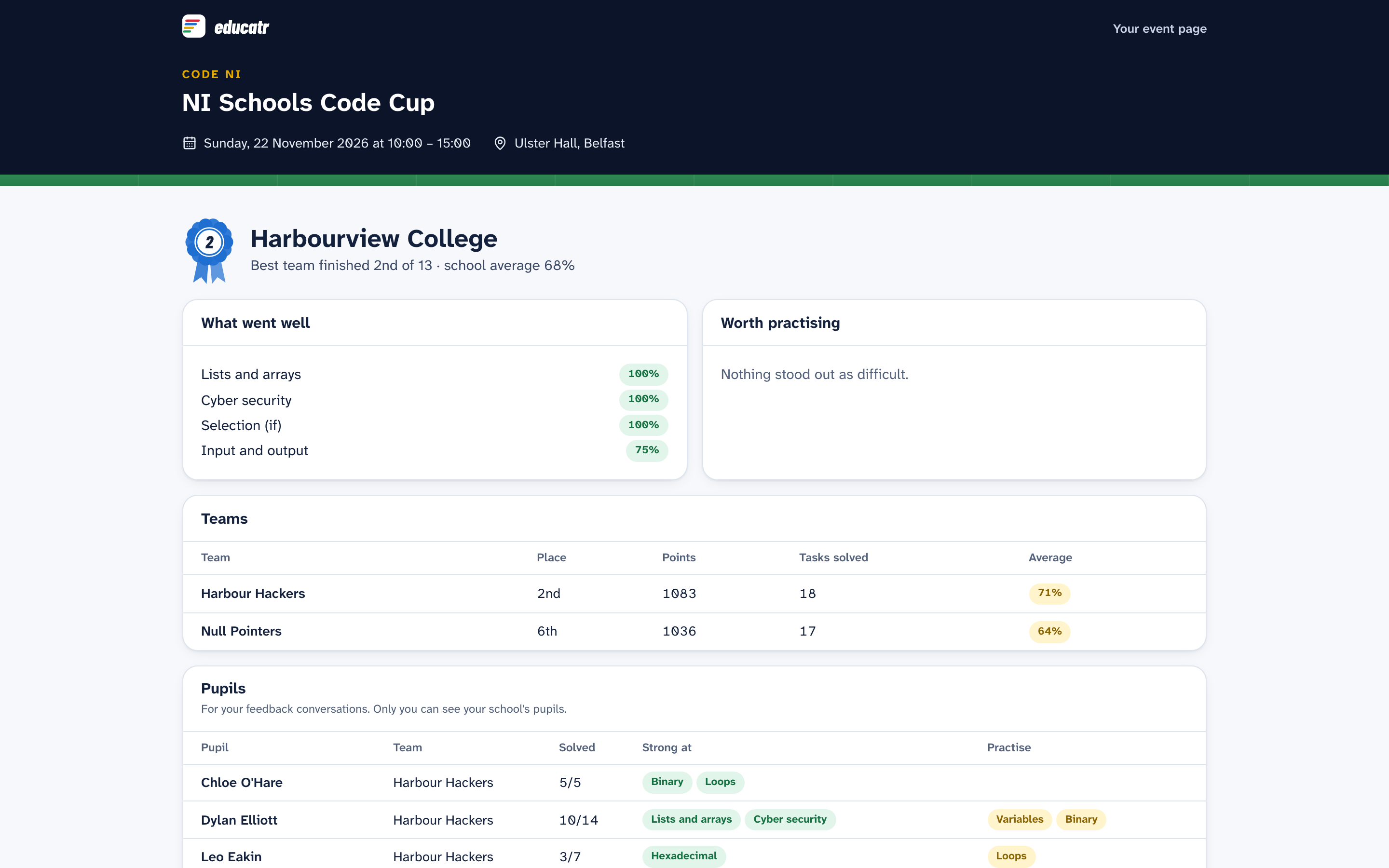
Ways to run it
The formats inter-school competitions use most, shown working with our demo data.
The Arena
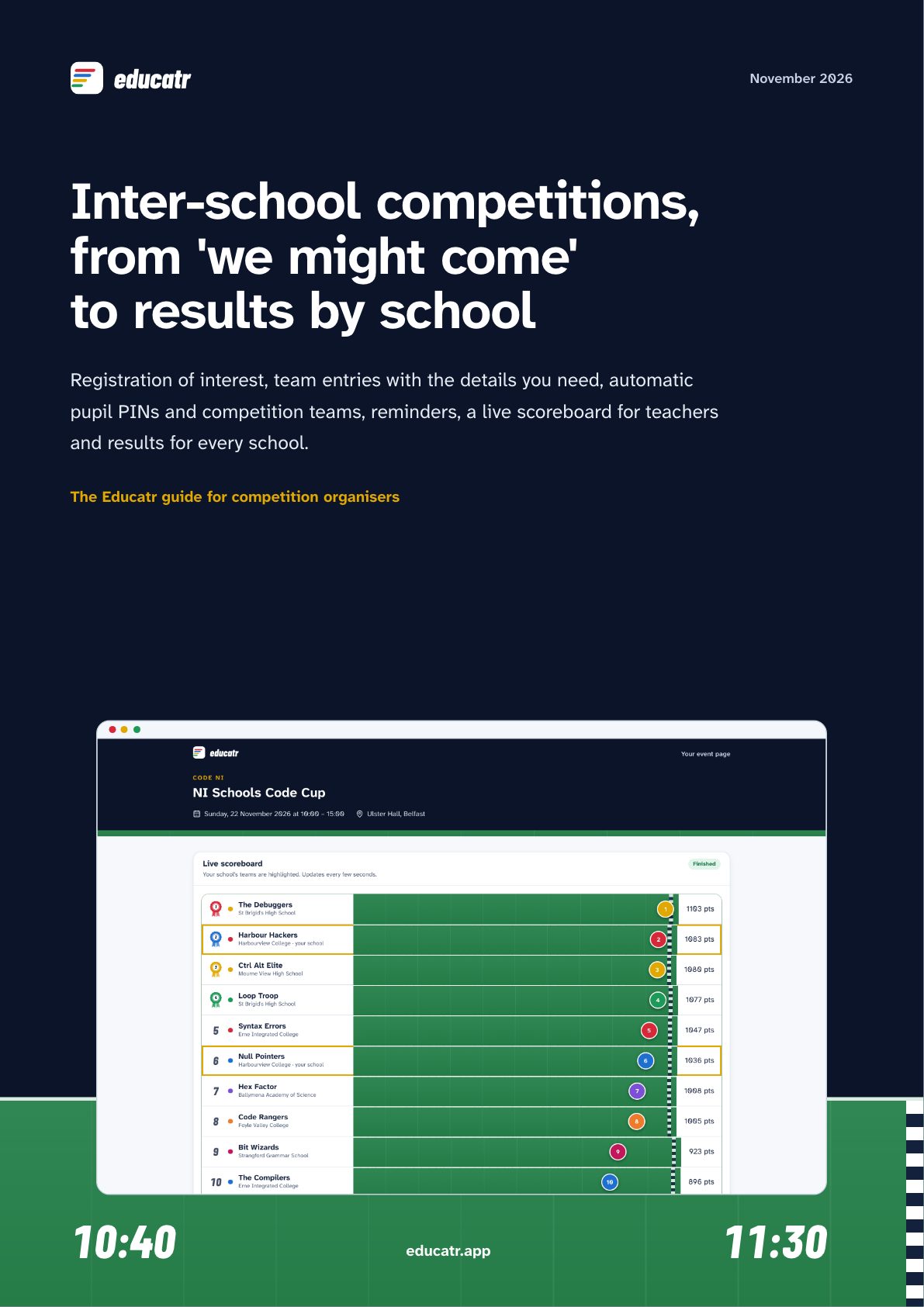
A capture-the-flag style race between teams, with the leaderboard, race chart and star performers on the whiteboard.
How it worksTeam play
What pupils see in a competition: the task board, instant marking and their teammates' solves arriving in real time.
How it worksBlitz quizzes
Quick-fire quiz rounds with code snippets, on the board and on every pupil's device. Faster right answers score more.
How it worksKing of the Hill
Every task is a hill. Solve it to capture it, then keep scoring for every minute you hold it, until another team takes it from you.
How it worksRelays
Tasks become legs of a race. Each leg unlocks when the team finishes the one before, and the baton passes to the next teammate.
How it worksCountdowns and pair roles
Give a competition a countdown, freeze the leaderboard for a tense finish, and have pairs swap between driver and navigator on a timer.
How it worksBattle Royale quizzes
A Blitz quiz where one wrong answer knocks you out. Pupils who are out stay and watch, and the last one standing wins.
How it worksLeagues
One table across several competitions: a house cup over the year, a termly inter-form league, or an inter-school league with a round each half term.
How it worksLogic Lab
Complete truth tables for logic circuits by flipping outputs, marked the moment pupils submit.
How it works
Everything in one guide
This page shows the highlights. The guide has every feature, a worked example, prices, safety and data protection, and answers to the questions people ask, in a PDF of 14pages you can share with colleagues.
Download the PDF (2.7 MB)Large one-day event plans cover up to 400 participants.
See event plansEducatr is also used by
Screenshots show fictional organisations with illustrative data.